
Deployment shapes
The same binary runs in every shape. What changes is the store driver, how many nodes answer, and whether dnsdist (load balancing, packet cache, encrypted transports) and keepalived (a floating VIP) stand in front. Both are GPL programs, so they always run as separate processes in their own images, each driven by a kudurru supervisor that is PID 1 in that container.
| Shape | Store | Nodes answering | Leader | Files |
|---|---|---|---|---|
| One container | sqlite state.db | 1 | itself | deploy/compose/single |
| One host + edge | sqlite | 1, behind dnsdist | itself | deploy/compose/single-edge |
| systemd | sqlite | 1 | itself | deploy/systemd |
| Kubernetes | kube (CRDs) | every replica (Deployment ≥ 2) | Lease holder | charts/kudurru, config/ |
| Kubernetes standalone | sqlite on a PVC | 1 (StatefulSet) | itself | charts/kudurru mode: standalone |
| Compose HA (static twins) | sqlite on each node | every node, behind dnsdist, one VIP | each node for itself | deploy/compose/ha/node-{a,b,c} |
Operator docs: deploy/. This page shows how the pieces talk to each other.
One container, and one host with the edge
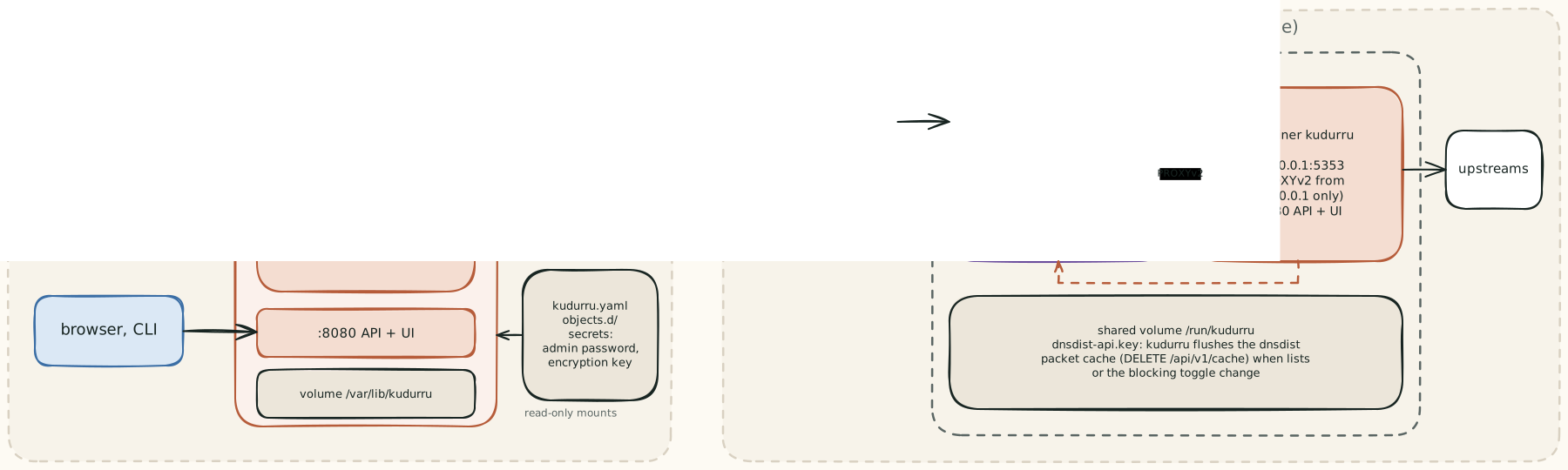
With the edge, dnsdist owns :53, :853 and :443 and kudurru listens on
127.0.0.1:5353. Because both share one network namespace, kudurru accepts
PROXYv2 only from 127.0.0.1 and needs no shared secret. When the lists or
the blocking toggle change, kudurru flushes dnsdist's packet cache through
the dnsdist API, whose key the supervisor writes to the shared
/run/kudurru volume.
Kubernetes
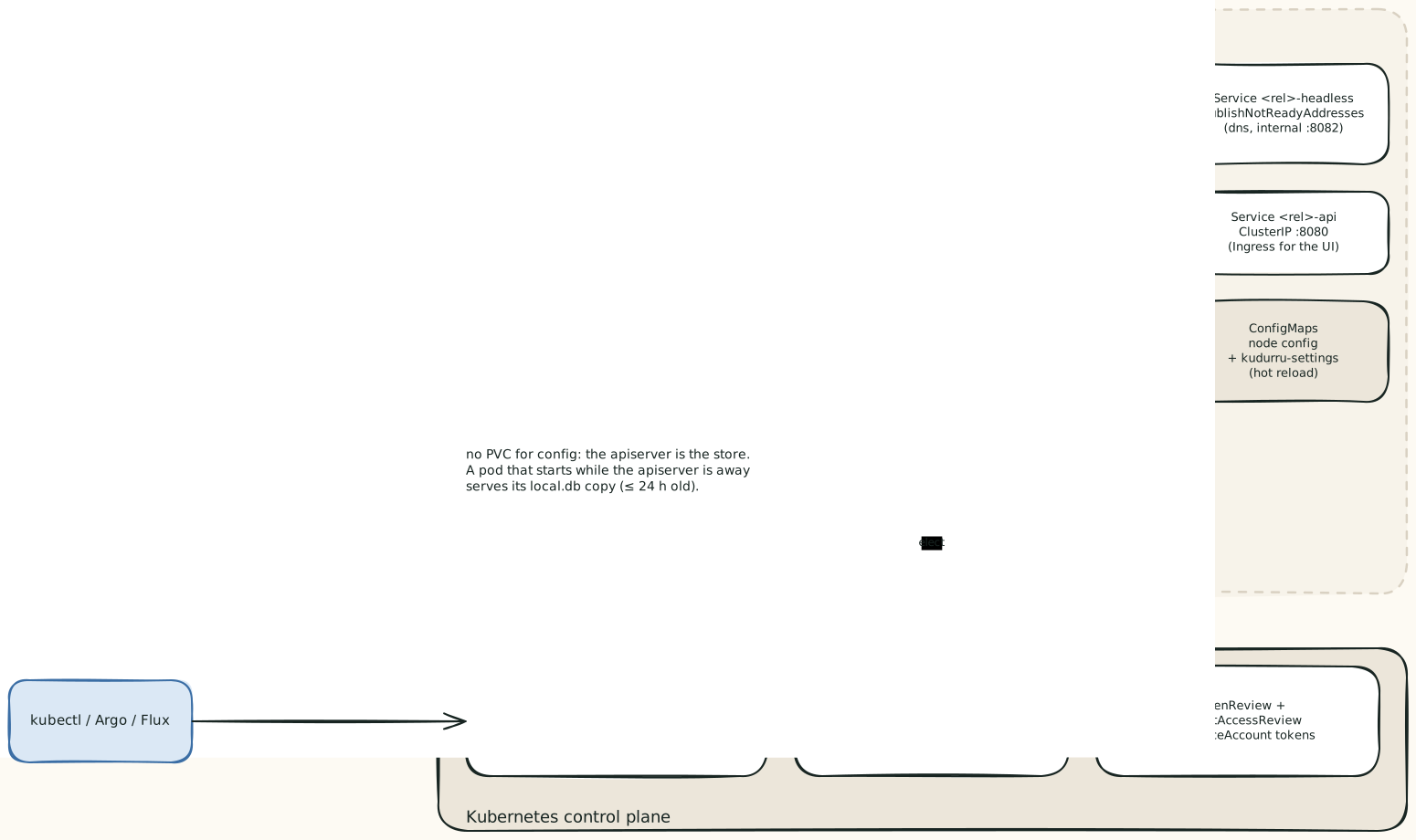
- The chart renders a Deployment (two replicas, PDB, topology spread)
with the kube driver, so there is no PVC for configuration. It switches to
a StatefulSet for per-pod query-log or
local.dbvolumes, to a DaemonSet withhostNetwork.enabled, and to a single-replica StatefulSet with the sqlite driver inmode: standalone. - The headless Service (
publishNotReadyAddresses) gives every pod a stable name. Its EndpointSlice is how replicas find the leader on:8082, how the Nodes page lists every replica (and fetches each one's status), and how the edge builds its backend list. - Probes use the ops port: startup, readiness and liveness on
/healthz/*(:8081).preStoprunskudurru lameduck, so a pod fails readiness and drains before it stops. externalTrafficPolicy: Localkeeps client addresses, which client groups and the query log need. The edge can run as a Deployment (default), as a sidecar in each kudurru pod, or as ahostNetworkDaemonSet with keepalived whenvip.provider: keepalived.kube-vipandmetallbonly add annotations to the dns Service.- A NetworkPolicy (optional) admits
:5353only from edge pods and:8082only from kudurru and edge pods.
Compose HA: three nodes, one VIP
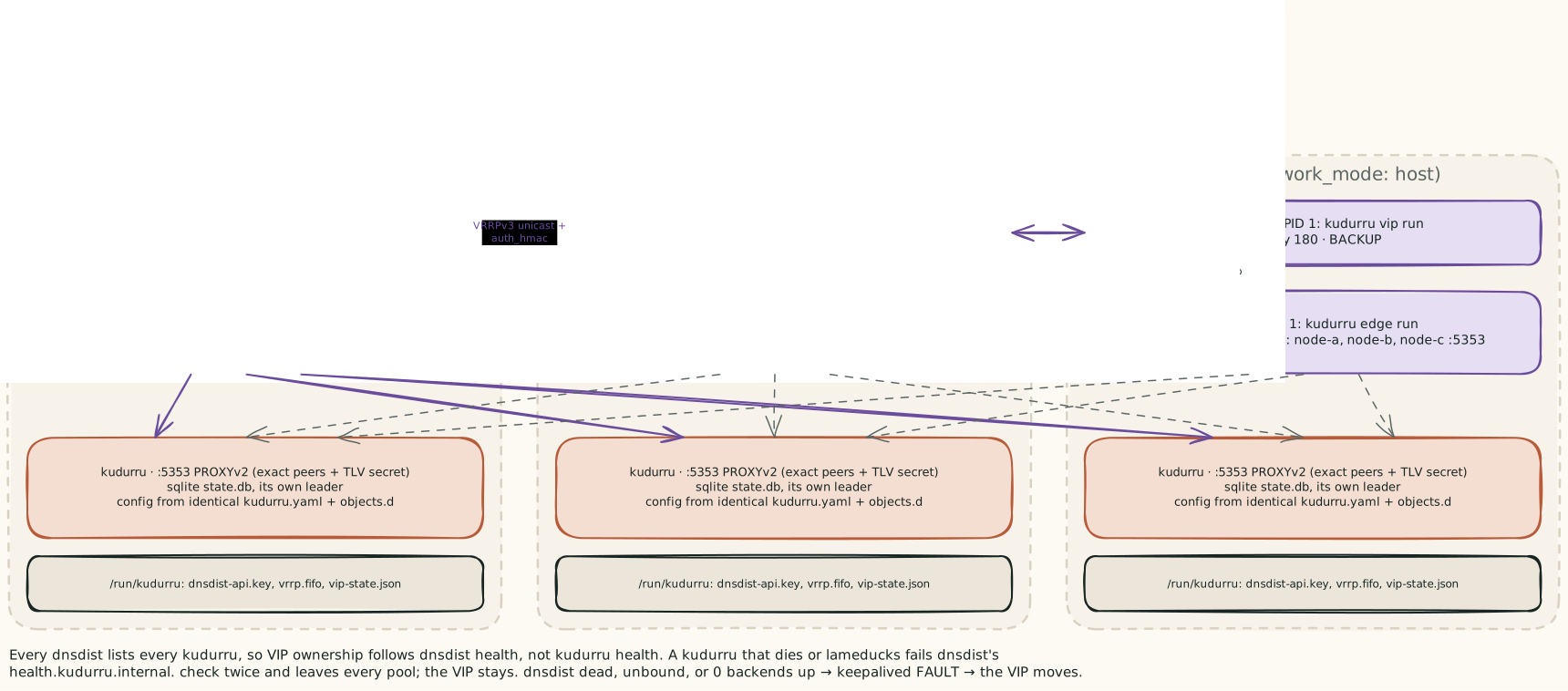
Each node runs the same three containers with network_mode: host. The
nodes do not share a store: each is an independent sqlite node with an
identical, file-managed configuration that you distribute (Git, Ansible,
rsync). keepalived decides who holds the VIP; every dnsdist sends to every
kudurru with PROXYv2 plus the shared TLV secret.
The edge supervisor (kudurru edge run)
flowchart TD
    START(["container start"]) --> MEM["backends: --backends list,<br/>or an EndpointSlice (ready endpoints)"]
    MEM --> CRED["new console key, API key,<br/>dashboard password (per start)"]
    CRED --> REN["render dnsdist.yml:<br/>pool resolver (chashed, packet cache)<br/>pool authoritative (leastOutstanding, no cache)<br/>add TLV 0xE0, refuse XFR/NOTIFY/UPDATE<br/>health check TXT health.kudurru.internal."]
    REN --> CHK{"dnsdist --check-config"}
    CHK -- "fails" --> KEEP["keep the running config"]
    CHK -- "ok" --> SWAP["swap files atomically,<br/>write the API key to /run/kudurru"]
    SWAP --> EXEC["start dnsdist --supervised"]
    EXEC --> LOOP{"event<br/>(debounced 5 s)"}
    LOOP -- "backends, zones or<br/>certificates changed" --> REN2["re-render"]
    REN2 --> DIFF{"bytes changed?"}
    DIFF -- "no" --> LOOP
    DIFF -- "yes" --> RST["readiness 503 for 1 s,<br/>stop dnsdist, start it again"]
    RST --> LOOP
    LOOP -- "dnsdist exited" --> BO["restart with backoff<br/>0.5 s .. 30 s"]
    BO --> LOOP
Readiness on :8084/healthz/ready is "dnsdist runs and at least one backend
is up". The supervisor also polls every backend's /internal/zones on
:8082 and flushes the authoritative pool's cache when a zone serial
changes (when that pool is cached). The poll needs the internal credentials
(KUDURRU_ENCRYPTION_KEY or --internal-token-file); the shipped chart and
compose files do not pass them to the edge yet, so there it stays off.
Membership changes restart dnsdist in
v0.1: invisible behind a VIP or a LoadBalancer with two edge replicas, a
sub-second gap for a lone edge.
The VIP (kudurru vip run)
The supervisor renders keepalived.conf (VRRPv3 unicast, state BACKUP,
nopreempt, auth_hmac, priority 200 - 10 × index), checks it, and runs
keepalived. keepalived itself calls two kudurru programs:
- the track script
kudurru health --vrrp, every second: a TXT query forhealth.kudurru.internal.over UDP and TCP to the VIP (or loopback when not holding it) through dnsdist, plus "≥ 1 backend up" from the dnsdist API; - the notify FIFO consumer
kudurru vip fifo, which writesvip-state.json; the supervisor turns it intokudurru_vip_master{vip}.
stateDiagram-v2
    direction LR
    [*] --> BACKUP: keepalived starts (state BACKUP, nopreempt)
    BACKUP --> MASTER: no adverts from a MASTER for ~3 s,<br/>highest priority among healthy nodes
    MASTER --> FAULT: track script fails 3 times<br/>or the weight file says 300 (vip drain)
    FAULT --> BACKUP: track script passes twice<br/>and the weight is back to 0
    MASTER --> STOP: SIGTERM (15 s to release the VIP)
    STOP --> [*]
    note right of BACKUP
        a recovered node does NOT
        take the VIP back (nopreempt);
        kudurru vip rebalance moves it
    end note
kudurru lameduck never touches the VIP (decision D51): it makes the local
kudurru answer the health name with SERVFAIL, so every dnsdist drops that
backend, while the VIP stays as long as the local dnsdist has a healthy
backend. Only kudurru vip drain (weight 300 → FAULT) moves the VIP on
purpose.
What happens when something fails
flowchart LR
    subgraph k["kudurru on node X dies or lameducks"]
        k1["dnsdist health checks fail twice (~2 s)"] --> k2["X leaves every pool;<br/>chashed remaps its share"] --> k3["VIP stays put"]
    end
    subgraph d["dnsdist on the VIP holder dies"]
        d1["supervisor restarts it (backoff)"] --> d2["track script fails 3× (~3 s)"] --> d3["FAULT: the VIP moves<br/>to the next priority"]
    end
    subgraph n["node lost"]
        n1["VRRP adverts stop"] --> n2["highest BACKUP becomes MASTER (~3 s)"] --> n3["on return, the VIP stays<br/>where it is (nopreempt)"]
    end
    subgraph a["every backend down"]
        a1["dnsdist answers SERVFAIL"] --> a2["track script fails on every node"] --> a3["no node holds the VIP:<br/>nothing healthy to send to"]
    end
In Kubernetes without a VIP, the Service follows readiness on :8081, the
lameduck preStop drains a pod before it stops, and the edge re-renders
within 5 s of an EndpointSlice change.
Not built yet
kudurru serve does not write the keepalived weight file itself (only
kudurru vip drain and vip rebalance do), so "prefer-not" (weight 60) is
unused. The compose twins have no read-only mode, and a zone transfer from
twins should name one node, because each twin stamps its own serials. The
follower driver (v0.2) and raft (v1.0) replace twins with one writable
primary.